In this article, we will explore ways to support others with anxiety.
You may like our previous articles in this series:
How Do I Manage Anxious Thoughts?
Many of us want to know how to support others when they are experiencing anxiety, whether we are a parent, teacher, family member or colleague. This article provides an overview.
How to support someone who may be experiencing anxiety?
Whether during an emergency, in the aftermath, or in everyday life. By working to stay calm and supportive of someone else, you may start to feel better too. When we help others through difficult experiences, it can heal us, too.
Safety First
In an emergency or dangerous situation, your priority is safety.
Help the person get to a safe place, follow emergency instructions, and meet their immediate needs.
Once they’re safe, you can offer emotional support and help them access tools or resources.
Some calming techniques can also be helpful during stressful situations—especially when someone is waiting, supporting others, or making decisions under pressure.
Recognising Anxiety in Adults and Adolescents
People express anxiety in different ways. You might notice:
Physical signs: shaking, sweating, rapid breathing, or pacing
Emotional signs: irritability, panic, or anger
Behavioural signs: avoiding situations, seeking constant reassurance, or freezing up
They may not say “I’m anxious,” but their behaviour might show it.
Recognising Anxiety in Children
Children may not have the words to describe what they’re feeling, so anxiety often shows up in their behaviour. Look for:
Changes in mood: tearfulness, clinginess, irritability
Physical complaints: tummy aches, headaches, or feeling sick
Sleep issues: trouble falling asleep, nightmares, or waking often
Avoidance: not wanting to go to school, play, or leave the house
Regression: returning to behaviours they’d outgrown (e.g. bedwetting, thumb-sucking)
Children may also ask repetitive questions or seek constant reassurance. These are signs they’re trying to feel safe.
If you’re looking for guidance on supporting children with anxiety, we have a free micro course you can sign up for here.
How to Respond Supportively
Respect people’s experiences and ask how they prefer to be supported.
Encourage people to make their own decisions, set their goals, and express their preferences and needs.
Try to understand their state of arousal (window of tolerance) for insight into what support might be helpful in the moment.
Be present and calm
Stay with them if they want company
Speak gently and clearly
A calm, supportive presence can help people shift emotional states through the practice of co-regulating. A supportive person can help by practicing a breathing technique or grounding exercise together for example.
Avoid rushing or overwhelming them
Model positive coping techniques
Use supportive language
Try saying:
“You’re safe now.”
“I’m here with you.”
“Let’s take this one step at a time.”
Avoid saying “Just calm down” or “Don’t worry”—these can feel dismissive.
Guide them through calming techniques (if you feel comfortable)
If they’re open to it, you can gently guide them through:
Box breathing: breathe in for 4, hold for 4, out for 4, hold for 4
Grounding: name 5 things they can see, 4 they can touch, etc.
Progressive muscle relaxation: tense and release muscles together
For children, make it playful:
“Let’s blow up a balloon together” (deep breathing)
“Can you find 5 blue things in the room?” (grounding)
“Let’s pretend we’re spaghetti—wiggly and relaxed!” (muscle relaxation)
Encourage mental health support
If anxiety is ongoing or severe, encourage them to seek help. You might say:
“It sounds like you are going through a tough time - what support would help you?”
“There’s a free helpline that offers support for anxiety —would you like me to help you find the number, or would you like me to call with you?”
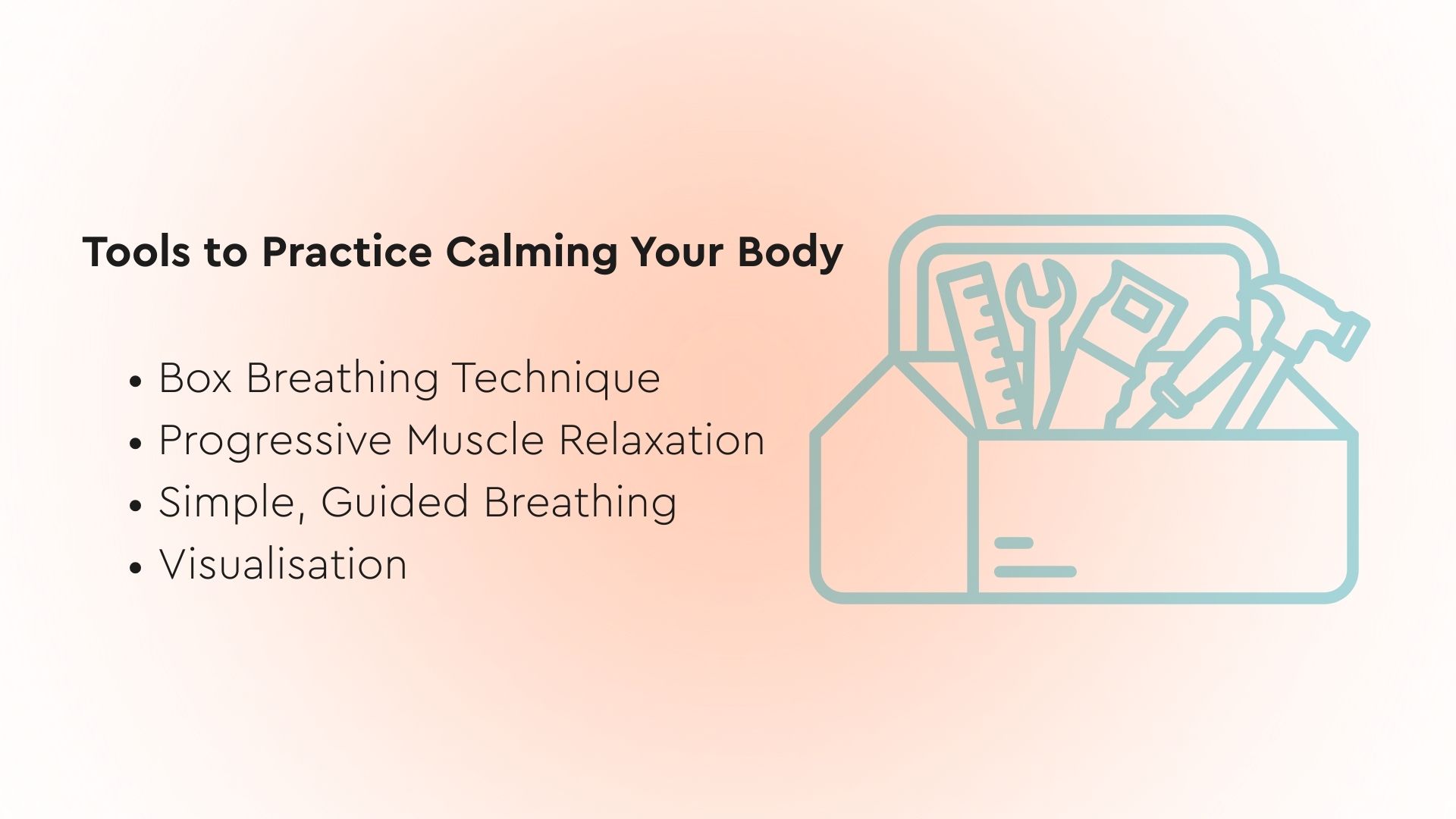
Grounding exercise
Use your senses to bring yourself back to the present:
5 things you can see
4 things you can touch
3 things you can hear
2 things you can smell
1 thing you can taste
This is especially useful during or after a stressful event.
For a child, you can make it simpler - "can you see four blue things?"
Want to practice some of these tools and learn more about anxiety, including eco anxiety? Steady in Uncertain Times is a free micro-course designed for anyone experiencing anxiety related to climate change or weather events—and for anyone who wants to build their resilience.
Looking after yourself too...
Looking after someone else can take a big toll, both emotionally and physically.
It's important to recognise caregiver burnout and take steps to prevent it. Caregiver burnout can look like physical, emotional and mental exhaustion. This can happen to people who regularly care for someone else. It’s important to be aware of the symptoms of this. They can look like chronic fatigue, sleep problems, feelings of hopelessness or irritability. It can also look like not looking after yourself and doing less and less socially. Recognising these things and taking action can help prevent burnout. Doing something could look like setting boundaries, asking for help, and taking breaks. It's important to recognise that taking care of yourself is not selfish. It’s important for our own well-being. It means we can give better care to our loved ones!
Self-care can include activities that bring us joy, such as exercise, spending time with loved ones, and hobbies. Remember to take care of yourself and seek help and support when needed.
The grounding and relaxation techniques above can be supportive to both you and your loved ones.
Are you supporting a whānau member with mental health challenges? Yellow Brick Road may be able to support you. Check out their advice and information hub here.
Need help now?
If you’re struggling with anxiety or just want to talk to someone, Anxiety NZ offers a free 24/7 helpline.
Call 0800 ANXIETY (0800 269 438)
We’re here for you—any time, any day.
Articles that you might find helpful
A personal story of what it's like to live with anxiety
Brief guided visualisation for supporting anxiety
Want to strengthen your own wellbeing, support someone who needs help, or build resilience to navigate life’s challenges? Steady in Uncertain Times is a free micro course designed for anyone experiencing anxiety related to climate change or weather events —and for anyone who wants to build their resilience.