In this article, adapted from the final lesson of Steady in Uncertain Times, we explore how resilience grows—both personally and collectively—and how taking positive, meaningful action can help us respond to anxiety, stress, and uncertainty with greater strength and confidence.
Whether you’re feeling on edge due to climate change, recent weather events, or the general unpredictability of life, resilience is something you can nurture. It’s not about “hardening up” or pretending everything is fine. It’s about finding ways to support yourself, stay connected, and move forward gently and realistically, even when things feel challenging.
You may like our previous articles in this series:
How Do I Manage Anxious Thoughts?
How Do I Support Others with Anxiety?
What Is Resilience?
Resilience is our ability to adapt, recover, and keep going in the face of stress, setbacks, or difficult experiences. It doesn’t mean we never feel anxious or overwhelmed. In fact, resilience often grows from navigating tough moments.
Resilience is the ongoing practice of living with awareness—responding and adapting to challenges in ways that meet your needs, protect your wellbeing, and allow you to participate fully in your life. It’s a combination of mindset, habits, social support, and the small decisions we make every day to care for ourselves and others.
Importantly, resilience is not something you either have or don’t have. It’s something we build over time, often quietly, through practice and compassion.
Ways to Build Resilience
Here are some supportive strategies that can strengthen resilience, especially during uncertain or stressful times:
1. Connect with people, passion, and purpose
Social connection is one of the strongest protective factors we have. Spend time with friends, whānau, and community groups. Reconnect with the things that give you joy and meaning—whether that’s creativity, being outdoors, volunteering, spirituality, or learning something new. Our relationships and interests help anchor us when life feels unpredictable.
2. Look after your body
The mind and body are deeply linked. Eating well, moving your body regularly, drinking water, and getting enough sleep are simple but powerful ways to support emotional balance. Physical well-being doesn’t remove stress, but it improves our capacity to cope with it.
3. Practice self‑compassion
It’s easy to be hard on ourselves when we feel anxious or unsure. But self‑compassion—speaking to yourself kindly, acknowledging your feelings, and recognising that struggle is part of being human—helps reduce shame and creates space for healing and clarity.
4. Focus on what you can control
When the world feels overwhelming, grounding yourself in small, meaningful actions can restore a sense of agency. This might include caring for your local environment, reducing waste, supporting a neighbour, or creating small rituals that bring stability to your day. You don’t have to fix everything—you just need to focus on the parts you can influence.
5. Create routines that are supportive and realistic
Gentle routines can provide structure and comfort, especially during times of change. Think of routines that help you feel cared for: a morning check‑in with yourself, a daily walk, a set bedtime, or a weekly catch‑up with someone you trust. Consistency doesn’t have to be rigid; it just needs to support you.
Taking Positive Action
Taking action—especially small, achievable steps—can help move our bodies and minds out of helplessness and into empowerment. Acknowledging how we feel and doing something constructive with that energy can turn the dial down on anxiety and increase our sense of hope and connection.
Here are a few ways to begin:
1. Get involved
Join a local environmental group, community garden, or beach clean‑up. Take part in a class, a book club, or start a walking group. Being part of a collective effort reminds us that we’re not alone and that our contributions matter.
2. Learn and share
Sometimes anxiety comes from not knowing what’s going on or feeling powerless to change it. Learning more about the things that worry you—like climate change or extreme weather—can help you feel more informed and grounded. Share what you learn with others in gentle, hopeful ways. Knowledge can reduce fear and strengthen community awareness.
3. Advocate for change
Your voice carries weight. Support policies, leaders, and local initiatives that prioritise environmental wellbeing, community resilience, and mental health. Advocacy can be as simple as signing your name, having a conversation, voting, or writing to someone in leadership.
4. Celebrate progress
Take notice of wins—big or small. Did you plant something? Repair something? Support someone? Start a new routine? Every step counts. Celebrating progress helps build motivation and reminds you that positive change is happening, even if slowly.
Resilience isn’t about being perfect or never struggling. It’s about acknowledging your feelings, connecting with what matters to you, and taking small steps that support your wellbeing and your community. By tending to your mind, body, and relationships—and by taking positive action—you build a foundation of steadiness that can support you through uncertain times.
This article is adapted from a lesson in Steady in Uncertain Times, a course designed for anyone experiencing anxiety related to climate change or weather events —and for anyone who wants to build their resilience. Join this free course now.
Need help now?
If you’re struggling with anxiety or just want to talk to someone, Anxiety NZ offers a free 24/7 helpline.
Call 0800 ANXIETY (0800 269 438)
We’re here for you—any time, any day.
Articles that you might find helpful
A personal story of what it's like to live with anxiety
Brief guided visualisation for supporting anxiety
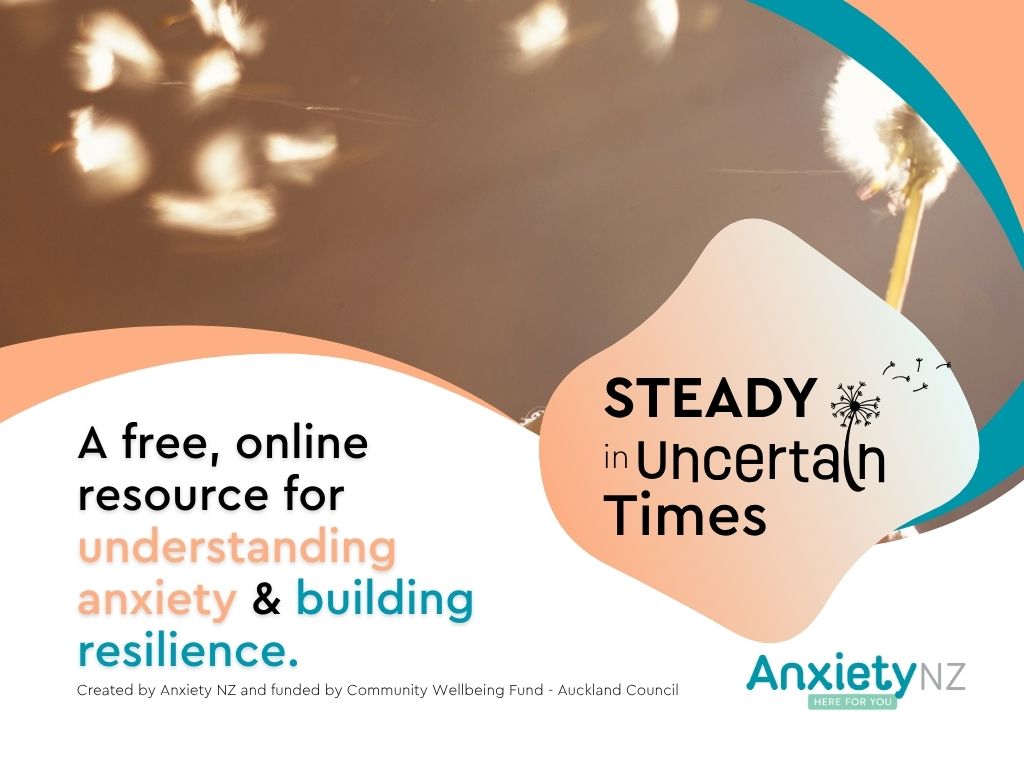
Want to strengthen your own wellbeing, support someone who needs help, or build resilience to navigate life’s challenges? Steady in Uncertain Times is a free micro course designed for anyone experiencing anxiety related to climate change or weather events —and for anyone who wants to build their resilience.
At Anxiety NZ, we’re committed to making quality mental health support accessible to people and whānau across Aotearoa New Zealand. Our counselling service is part of that commitment — offering a safe, supportive space to talk, reflect, and work toward your wellbeing goals — at an affordable cost to you (or fully funded for eligible low-income earners or those under 18).
Our counsellors are passionate, skilled, and in the final stages of their professional training. Supported by approved clinical and peer supervision, they bring warmth, insight, and fresh perspectives to their work with clients.
Whether you’re navigating anxiety, life transitions, grief, stress, or simply want someone to talk to, our counselling team is here to support you.
-medium.jpg)